Grammar Chaos: Decluttering Your Documents
Posted on Jan 11, 2017
Writers, no matter the amount of experience and the caliber of skill, are prone to mistakes. They are, after all, merely human. There are mistakes that can slide right by the eyes of an inattentive reader. Redundancy is one of them.
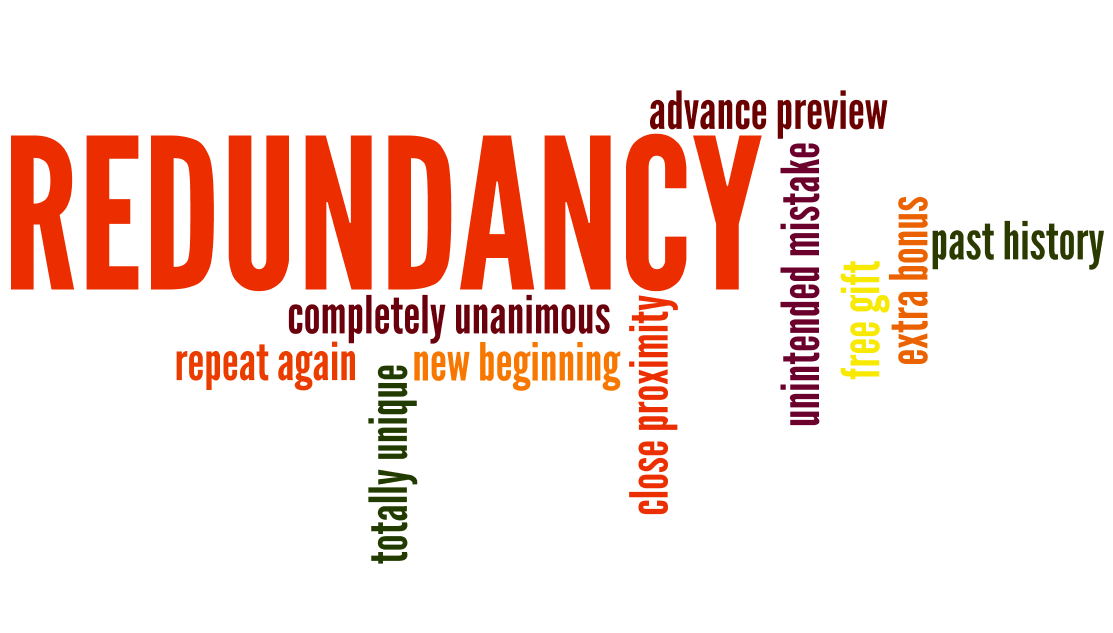
Admit it, we writers have a pretty bad habit of trying to use way too many words in an effort to impress our readers. This is why we often use redundancies and fail to spot them immediately.
Many would think that redundancy is the combination of two words that have similar meaning. In fact, redundancies come in many forms. Redundancy occurs in phrases wherein the adjective or adverb used is already in the meaning of the word. Examples of this type include past history, new invention, and truly factual. Redundancy also happens when adverbs repeat a meaning contained in a word with a prefix. Examples are protruded out, reverted back, and re-elect again.
It may be an easy enough dilemma, but because of our limited vocabulary and tendency to combine words that sound good together (just look at alliterations), there are some phrases that are not only redundant but are also overused.
- Kind consideration
- The reason for this is because
- Please RSVP
- [Time] a.m. in the morning
- ATM machine
This phrase is often used to close letters. The phrase is redundant because consideration is already an act of kindness.
The word because and phrase reason for this express the same idea.
This overused phrase could be forgiven for its use simply because the acronym is barely explained. RSVP stands for “Repondez, s’il vous plait,” which is French for “please respond.”
The abbreviation a.m. stands for ante meridiem, which means “before midday.” Therefore, the abbreviation already implies the morning, unlike p.m., which can mean either in the afternoon or in the evening.
Just like item #3, this redundancy is another forgivable one, this time because the abbreviation is used more than its meaning.
There are several things you can do to avoid redundancies in your final copy. While writing, make sure to think about your sentence first to make sure that it all makes sense. Spell out abbreviations—for example, remember that ATM stands for “automated teller machine” and that there’s no need to add machine after the acronym. If you’re unsure about your word usage, it’s wise to consult a dictionary or thesaurus to make sure that the two words are not similar in meaning and that they make sense when put together.
Sources:
Disclaimer: Image is not ours. Credit to the owner.
About 1-Hour Proofreading
1-Hour Proofreading is a growing start-up offering fast and efficient editing services at a reasonable price with the assurance that the document is publication-ready the soonest you need it. Its team of highly competent professional editors is committed to helping those in need of quality editing services while facing tough deadlines.
Visit 1hourproofreading.com for more details.
Follow us:
Back to Grammary